
True Solidarity
Showing Our Support for the Palestinian People

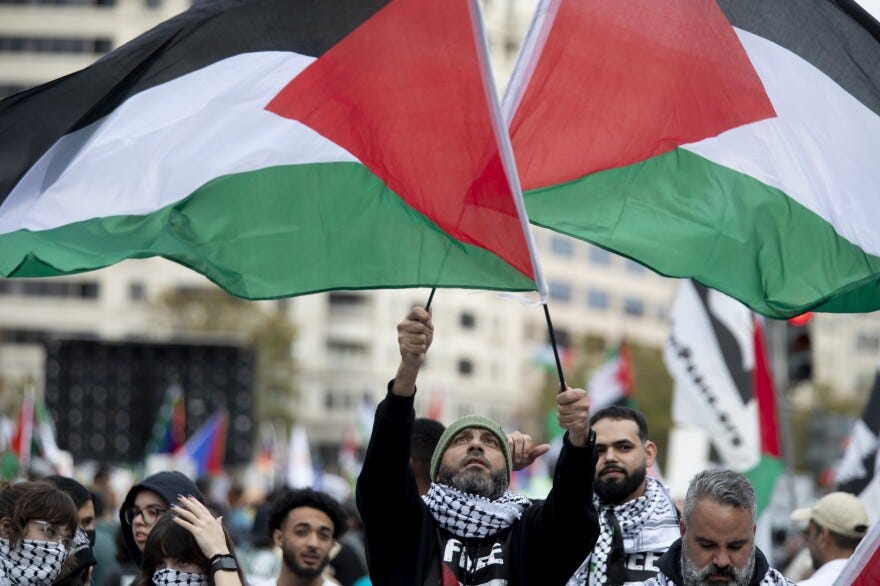
As rockets and gunfire echo across Gaza, it’s tempting to think humanity hasn’t learned a thing in nearly 80 years, since the 1947 partition plan that proposed separate Jewish and Arab states in Palestine. After all, politicians still debate borders like it’s a board game, while civilians pay the price. Families flee their homes, children are caught in the crossfire, and civilians—like so many before them—suffer the consequences of unresolved history.
On November 29, the International Day of Solidarity with the Palestinian People, we pause to remember not only the victims of ongoing violence, but also the deep historical, political and spiritual threads that tie this day to our conscience and faith.
The Origins of November 29: A Day of Solidarity
The United Nations first designated November 29 as the International Day of Solidarity with the Palestinian People in 1977, marking the anniversary of UN Resolution 181, the 1947 partition plan that proposed separate Jewish and Arab states in what we tend to refer to as the Holy Land. The plan, meant to be a diplomatic solution, instead sparked decades of displacement, war and suffering. In hindsight, one might say this “divide-and-conquer” approach was less about peacemaking, and more about creating news headlines that haunt us to this day. Post-World War II geopolitics, the Holocaust’s aftermath, and Cold War maneuvering left Palestinians stateless—a human tragedy that sadly remains unresolved.
The U.S. Context: Politics, Protest and Public Awareness
The United States has long been a staunch ally of Israel, providing diplomatic, military and financial support to a nation that has possessed nuclear arms since the 1970s. Meanwhile, Americans who speak up for Palestinian rights sometimes feel like they’ve discovered a secret club that others pretend doesn’t exist. In recent decades, pro-Palestinian activism has grown on college campuses, in grassroots movements, and within faith communities. From early marches to modern protests responding to military actions, these efforts raise pressing questions:
How do we respond when our nation’s foreign policy contributes to human suffering?
And can we engage this issue with intellectual honesty, without falling into tribalism or despair?
Saints and Servants: Lessons from de Hoyos and Day
While seemingly far removed from the modern Middle East, Bernardo Francisco de Hoyos (1711–1735) and Dorothy Day (1897–1980), whom the Church celebrates today, offer spiritual guidance.
Blessed Bernardo Francisco de Hoyos, a Spanish Jesuit, promoted devotion to the Sacred Heart of Jesus, emphasizing compassion for the marginalized. In a world that often “saves headlines, but not people,” de Hoyos reminds us to see Christ in every suffering soul—including those living under occupation today.
Servant of God Dorothy Day, co-founder of the Catholic Worker Movement, lived a life of radical solidarity with the poor. She insisted on nonviolence, hospitality, and direct action. Day’s example challenges us: Solidarity isn’t a catchy hashtag; it’s feeding the hungry, sheltering the displaced, and speaking truth to power—even when it’s inconvenient or unpopular.
Calls to Action
As Catholics and informed citizens, we might take various concrete steps today:
Educate Yourself and Others. Learn the history of Palestine-Israel, and pay particular attention to the voices that have been too often ignored.
Foster Dialogue: Encourage nuanced conversations that resist polarization and demonization.
Pray and Reflect: Incorporate the suffering of the Palestinian people into your spiritual life.
Support Humanitarian Aid. Contribute to organizations providing food, shelter and medical care to those affected.
Engage Politically. Advocate for policies that respect human rights, international law, and civilian safety.
True Solidarity
On this day of remembrance, let us move beyond headlines, politics and partisanship. Solidarity with the Palestinian people calls us to see Christ in every displaced family, every grieving parent, and every child whose life is threatened by conflict. Like Bernardo Francisco de Hoyos and Dorothy Day, we are invited not merely to sympathize, but to act—to embody mercy, speak truth, and advocate tirelessly for justice. True solidarity is never passive; it is a daily commitment to love, serve and protect the vulnerable—even when history seems determined to repeat its mistakes!
Questions for Prayer and Reflection
In what concrete ways can I stand in solidarity with the oppressed today?
How do I recognize my own privilege, and how can I use it to amplify the voices of those who are silenced?
In what ways might I be complicit in systems of injustice, and how can I work to correct them?
How do mercy, justice and nonviolence guide my response to global conflicts?
How can I practice patience and perseverance in advocating for peace, even when progress seems impossible?
What small, concrete acts of mercy can I perform today that honor the dignity of those in conflict zones?
How can I cultivate empathy for people whose experiences are far removed from my own daily life?
How might the examples of Bernardo Francisco de Hoyos and Dorothy Day inspire me to integrate faith and action in my life?
A Prayer for the Palestinian People:
Good and gracious God, we lift up the Palestinian people, especially the innocent who daily suffer from violence, displacement and fear. May your justice shine in their lives. Grant courage, compassion and wisdom to those who can bring relief, and kindle in our hearts a commitment to stand with the oppressed. We ask this in the name of Jesus our Lord, who trod the roads of Israel and Palestine, and who blesses the hearts of all who live in love and peace. Amen.